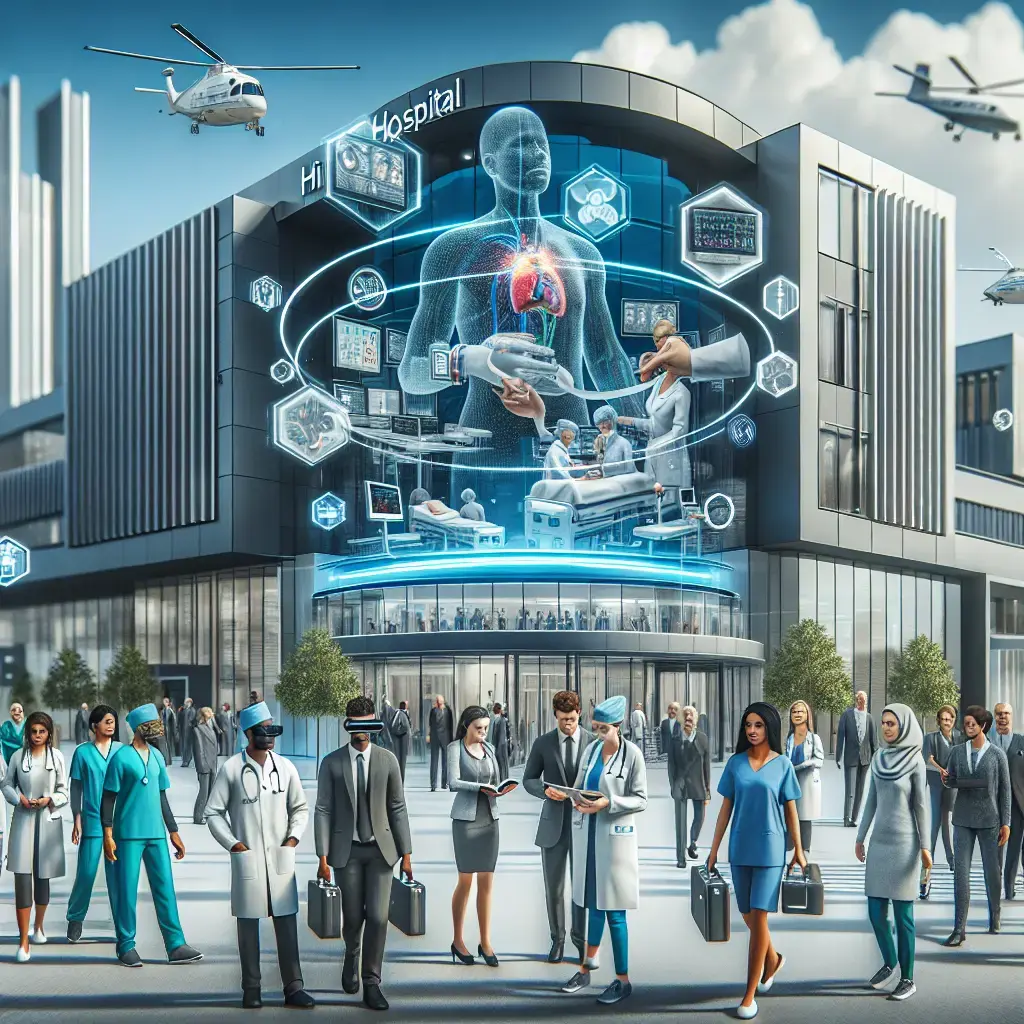
Virtual reality is transforming the landscape of education, offering innovative and immersive experiences that redefine traditional learning methods.
The advent of virtual reality (VR) in education has ushered in a new era of teaching and learning, characterized by its ability to provide immersive and interactive experiences. This technology is making significant strides in various fields, with medical education at the forefront of this transformation. Institutions like King Faisal Specialist Hospital & Research Centre (KFSHRC) are pioneering this change through cutting-edge training and simulation programs.
Revolutionizing Medical Education
KFSHRC is setting new benchmarks in clinical training by integrating VR into its educational framework. Their iLearn Portal offers comprehensive simulation-based learning, which enables medical professionals to hone their skills in a risk-free environment. This immersive approach not only enhances understanding but also builds confidence by allowing learners to engage with realistic scenarios without the consequences of real-world errors.
Benefits of VR in Education
Virtual reality offers numerous advantages in an educational setting:
Engagement and Motivation: VR captivates students’ attention, making learning more engaging and motivating them to explore topics further.
Experiential Learning: Through VR, learners can experience simulations that would be impossible or impractical in a traditional classroom, such as complex surgical procedures or historical events.
Safe Learning Environment: Particularly in medical training, VR provides a platform for students to practice procedures without the risk associated with live patients.
Enhanced Retention: Studies have shown that interactive and immersive learning environments lead to better retention of information compared to traditional learning methods.
The Future of VR in Education
The potential applications of VR in education extend far beyond medicine. As technology advances, we can expect to see VR becoming integral in diverse fields such as engineering, architecture, and even liberal arts. The ability to visualize and interact with complex concepts in a three-dimensional space offers endless possibilities for enriching educational experiences.
Conclusion
The integration of virtual reality into education signifies a profound shift towards more interactive and effective learning methodologies. As exemplified by the efforts at King Faisal Specialist Hospital & Research Centre, VR is not just a tool for engagement but a critical component of modern educational strategies. The future of education is undoubtedly intertwined with technology, paving the way for more accessible and efficient learning environments.
For those interested in learning more about the innovative strides KFSHRC is making in medical education through virtual reality, you can read further here.
Warm regards,
Oliver Chandler