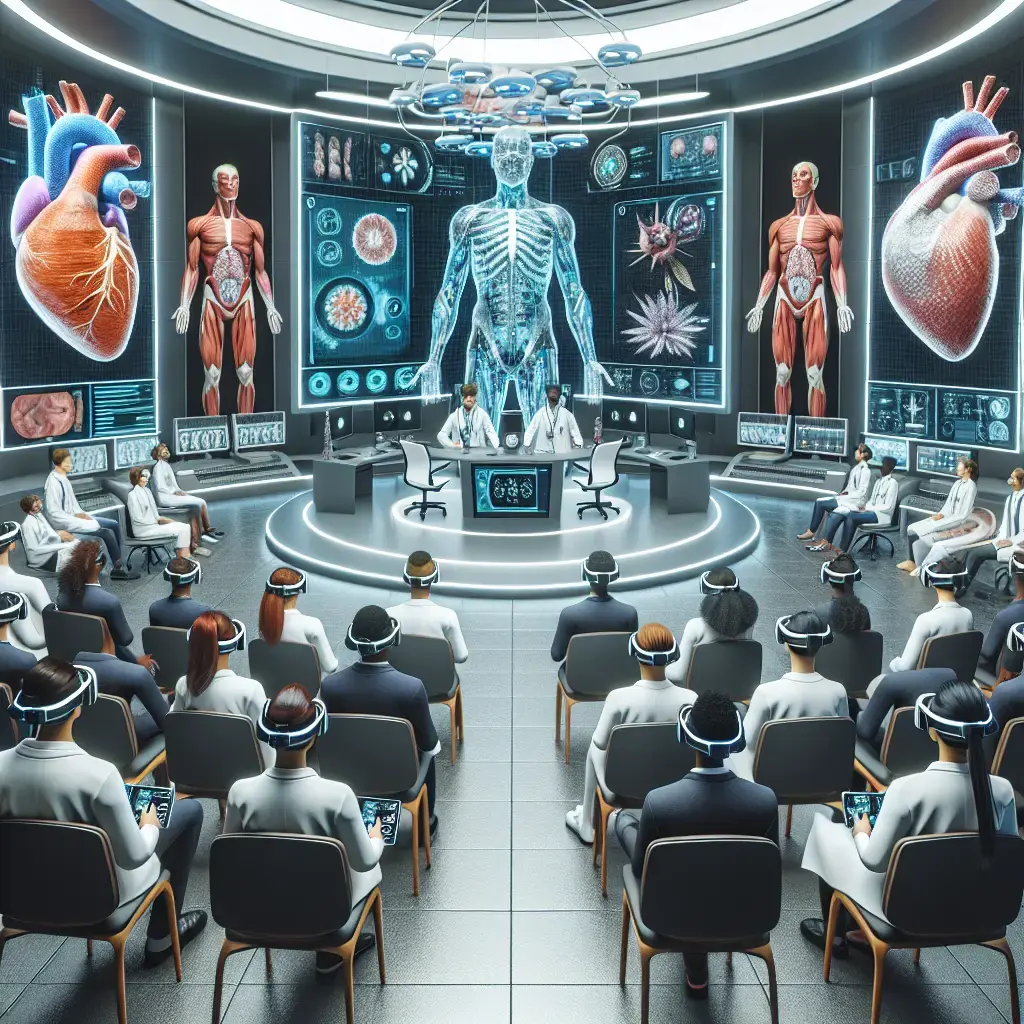
Virtual Reality is transforming the landscape of education, providing immersive and interactive learning experiences that were once the realm of science fiction.
In a groundbreaking development, King Faisal Specialist Hospital & Research Centre (KFSHRC) has set new global standards in the application of virtual reality (VR) technology within the educational sector. As unveiled at AMEE 2024, a leading international conference on medical education, KFSHRC's pioneering approach showcases how VR can redefine training and learning environments, particularly in the field of medicine.
The Impact of VR in Medical Education
VR technology offers unparalleled opportunities to enhance the quality of education, especially in disciplines requiring hands-on practice and real-world experience. Here's how VR is making waves:
Enhanced Learning Experiences: VR provides students with a realistic simulation of clinical environments, allowing them to practice procedures without the risk of harm to patients. This fosters a deeper understanding and retention of complex concepts.
Skill Development: Trainees can hone their skills in a controlled, repeatable manner. The ability to practice repeatedly on virtual patients ensures they are well-prepared for real-life medical challenges.
Global Access and Standardization: VR technology bridges geographical barriers, offering standardized training modules accessible to students worldwide. This democratization of education ensures consistent quality regardless of location.
KFSHRC’s Pioneering Role
By integrating VR into their curriculum, KFSHRC is not only enhancing their educational offerings but also contributing significantly to the global conversation on innovative teaching methods. Their approach serves as a model for institutions worldwide striving to incorporate cutting-edge technology into their training programs.
The Future of VR in Education
The potential applications of VR extend beyond medical training. From virtual field trips that explore ancient civilizations to interactive chemistry labs, the possibilities are endless. As technology evolves, so too will its applications, offering educators powerful tools to engage and inspire students.
Conclusion
As KFSHRC demonstrates, embracing VR technology in education is not just about keeping up with technological trends; it's about setting new standards for learning and preparing students for the future. As educators and institutions worldwide look towards the future, integrating VR into curricula could be the key to unlocking new levels of engagement and success.
For more insights on this revolutionary approach to education, you can read the full article here.
Warm regards,
Oliver Chandler